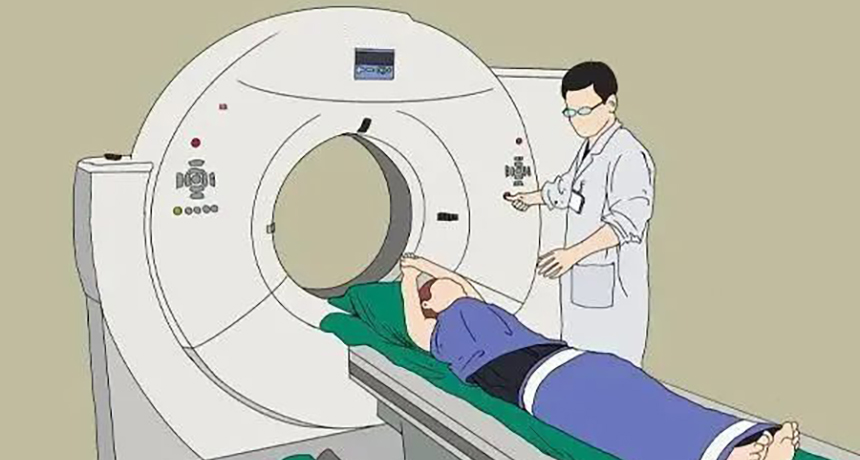
Go to the hospital to take a X-ray, do a CT... Everyone has done one or two of these examinations at one time or another. With the help of these examinations, doctors can more accurately understand the patient's condition, make a clear diagnosis, and formulate a more complete treatment plan. These imaging examinations are like the doctor’s “right and left arm”, contributing to the recovery of patients’ health.
Behind these examinations, there is a common name -
X-ray.
Where do “X-rays” come from, and what are their medical applications? What related matters should be paid attention to? Let’s learn one by one through a set of questions and answers.
1. What is radiation? Why is it called X-ray?
Radiation is a type of ray that is invisible and imperceptible to the human eye. It can penetrate the human body and general objects, even through metal products.
German scientists discovered that after radiation passes through the human body, it reveals the complex world of the human body that is invisible to the naked eye, so they named it "X-rays." X represents the unknown, mystery, and infinity.
2. Who discovered X-rays? What are the main applications in medicine?
In 1895, the German scientist Röntgen discovered X-rays and photographed his wife's hand bone with a ring on it. This was the world's first X-ray photo, and medical radiology was born. CT, chest X-ray, etc., which are currently widely used, all belong to the category of X-ray diagnosis, including the application of new medical imaging examination technologies such as digital subtraction angiography, magnetic resonance imaging, and X-ray photography.
X-rays have changed the process of medical science, especially clinical medicine, to a considerable extent. Its discovery is a milestone in the history of natural science and has made great contributions to the prevention and treatment of human diseases.
3. In addition to diagnosis, what other applications do X-rays have in medicine?
The main applications of X-rays in medicine include imaging diagnosis, interventional therapy, radionuclide tracer tumor screening, and radiotherapy.
4. What are the examination items of medical imaging? Do all imaging tests involve radiation?
Medical imaging includes X-ray examinations, CT examinations, MRI examinations, ultrasound examinations, nuclear medicine examinations, etc. Ultrasound examinations and MRI examinations do not radiate to the human body, while X-ray examinations, CT examinations, and nuclear medicine examinations do.
5. Is medical examination with radiation safe?
Radiation is divided into ionizing radiation and non-ionizing radiation.
Non-ionizing radiation has been widely used in our lives, such as computers, mobile phones, microwave ovens, MRI, B-ultrasound, etc., and causes almost no damage to the human body.
Most radiology examinations contain ionizing radiation, such as X-rays, CT, nuclear medicine, etc., but radiation does not equate to harm. The report of the International Commission on Radiation Protection states that radiation below 100mSv is relatively harmless to the human body.
At present, the radiation dose of all examination items in the radiology department is within the safe range, so there is no need to worry about radiation issues. And during examinations, doctors will try to keep radiation exposure to the "lowest reasonable and feasible range" and will also wear lead suits for patients and family members for protection to reduce the patient's exposure dose.
6. Will X-rays stay in the body for a long time after being irradiated?
The medical X-ray machine itself is non-radioactive. It only produces X-rays when the exposure button is pressed after power is turned on. The machine room will be shielded and undergo strict protection testing to ensure that its radiation level remains within the national dose limit. , to prevent waiting patients and their families from unnecessary radiation exposure.
X-rays are external radiation. The harm to the human body is the direct and indirect effects on human tissues and organs when the rays penetrate the human body. The human body itself can perform compensatory repairs through metabolism. Just drink more water after the examination.
In addition, you can also eat foods containing lycopene (tomatoes, red grapes, etc.), foods containing high-quality protein, and drink green tea after the examination to reduce the impact of radiation on the human body.
7. Can X-ray examination be used as a routine physical examination item?
Can.
The World Health Organization's standard is that the radiation dose received by the human body does not exceed 5mSv per year. With the advancement of science and technology, X-rays and CT examinations currently commonly used for physical examinations have lower radiation doses. A chest X-ray taken during a routine physical examination in a unit is about 0.1mSv, and a low-dose chest CT is about 1mSv.
After the subject cooperates and takes protective measures according to the doctor's requirements during the examination, the human body can completely metabolize the radiation received by itself. The subjects do not need to worry about the harm caused by being exposed to X-rays, nor should they refuse the examination due to concerns.
8. What should we pay attention to during medical imaging examination?
a. Before the examination, first check whether you have brought any metal objects. If you wear metal objects, you must remove them in time, including necklaces, bracelets, rings, keys, etc., and follow the staff's arrangements.
b. It is better to wear cotton clothing when doing imaging examinations. Don't be too nervous during the examination, just relax and follow the doctor's instructions to cooperate with the examination. This will be more conducive to the accuracy of the examination results.
c. Do not talk or move during the examination to ensure higher quality scanned images.
d. If it is an enhanced examination, it needs to be done on an empty stomach. Therefore, you cannot eat or drink 6 hours before the examination.
e. Pregnant women cannot undergo X-ray or CT examinations. If inspection is necessary due to special circumstances, special declaration and notification are required.
The above are the common misunderstandings about
medical x-ray machines. ysenmed is a professional medical x-ray machine supplier from China. In 2006, we exported 125 sets of medical x-ray machine to Congo at one time, setting a record of exporting medical x-ray machine to foreign countries. In 2008, the same customer ordered another 150 x-ray units and 800 sets of surgical instruments. So far, we have established good cooperation with customers from 88 countries globally.